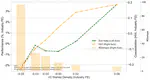
This paper develops a dynamic model of venture capital networks to study how financial intermediation shapes startup performance and market entry. It highlights three key mechanisms: assortative matching, value-added support, and entry deterrence through coordinated behavior—showing how networks can both improve efficiency and restrict competition. The model provides testable predictions on matching, funding, and market concentration, and serves as a foundation for future structural estimation.